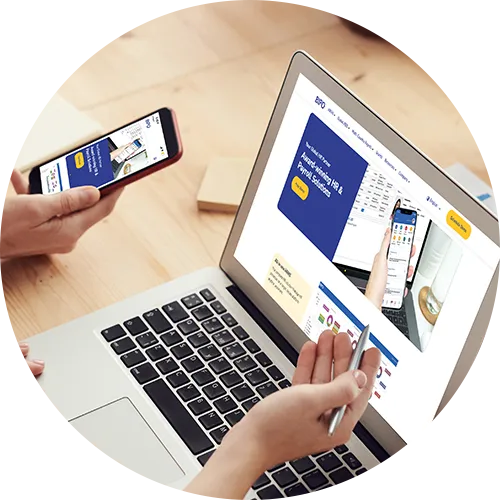
Employee self-service used to mean logging into a desktop portal, navigating a clunky menu, and hoping the system worked outside the office. That model no longer fits how people work. Today, employees expect quick access to HR support from anywhere, whether they are at home, in the field, in a regional office, or on the move.
That shift is why mobile HR is becoming central to workforce operations. Providers like global HR solution, a global HR technology and services provider, help businesses manage HR, payroll, attendance, and employee services across markets. A well-designed mobile HR app can improve the employee experience while reducing the manual workload that slows HR teams down.
Why Employee Self-Service Matters More Than Ever
Self-service is no longer just a convenience feature. It is now a basic part of running HR efficiently at scale.
Employees want fast answers and easy access to routine tasks. HR teams want fewer repetitive requests and better process control. Mobile self-service helps both sides.
What employees expect today
Most employees want to handle simple HR tasks on their own, including:
- Checking payslips
- Viewing leave balances
- Requesting time off
- Updating contact details
- Submitting claims
- Accessing company documents
- Tracking request status
If those actions require emails, forms, or long wait times, frustration grows quickly.
Why HR teams care about self-service
For HR, the value is practical. Mobile self-service can help reduce:
- Repetitive administrative work
- Delays in approvals
- Errors from manual data handling
- Dependence on paper or email-based processes
- Bottlenecks caused by office-only access
When employees can complete routine actions themselves, HR has more time for work that needs real attention, such as workforce planning, employee support, and compliance oversight.
Mobile Access Fits the Reality of Global Work
Global workforces are more distributed than ever. Teams now work across countries, time zones, and job types. Some employees work remotely. Others are deskless. Many move between locations during the week.
A mobile-first approach reflects that reality better than desktop-only systems.
Access from anywhere improves responsiveness
Mobile access allows employees to complete tasks in real time instead of waiting until they are back at a desk. That can make a big difference for:
- Remote employees
- Traveling managers
- Deskless workers
- Regional teams across time zones
- Employees without regular laptop access
A worker in one country should not have a harder time accessing HR support than someone at headquarters. Mobile self-service helps create a more consistent experience across locations.
It also supports business continuity
When HR services are available through mobile devices, employees can still access important information during travel, office closures, or remote work periods. That flexibility makes routine HR support more reliable.
Routine HR Tasks Become Faster and Simpler
One of the biggest strengths of mobile HR is its ability to remove friction from everyday tasks.
Common tasks that work well on mobile
The best mobile self-service tools make it easy to complete routine actions such as:
- Leave requests and approvals
- Payslip viewing
- Attendance and clock-in actions
- Expense claim submission
- Personal data updates
- Document access
- Policy acknowledgments
These are small tasks on their own, but together they take up a large amount of time across the business. Making them easier has a clear operational payoff.
Small improvements create large gains
If each employee saves only a few minutes per week, the effect adds up quickly across a global workforce. HR gains time. Managers deal with fewer follow-ups. Employees get faster results.
That is one reason mobile self-service often delivers value faster than companies expect.
Manager Workflows Benefit Too
Employee self-service is only part of the picture. Managers also play a major role in keeping HR processes moving.
Mobile approvals reduce delays
Many HR processes stall because managers are not at their desks when action is needed. Mobile access helps them review and approve requests more quickly, including:
- Leave requests
- Attendance corrections
- Expense claims
- Shift changes
- Employee updates requiring sign-off
This matters because delays in manager action often affect payroll, scheduling, and employee satisfaction.
Faster manager action improves process flow
When approvals move faster:
- Payroll inputs are more accurate
- Employees get quicker answers
- HR spends less time chasing responses
- Teams can plan work more effectively
In global teams, where managers may oversee employees across different locations, mobile access makes approvals more practical.
Self-Service Adoption Depends on Simplicity
Not every mobile HR rollout succeeds. One common reason is that the app is too complex or does not match how employees actually work.
What drives adoption
Employees are more likely to use mobile self-service when the app is:
- Easy to navigate
- Fast to load
- Clear in its wording
- Useful for frequent tasks
- Secure without being difficult to access
- Available in relevant languages where needed
If the app feels confusing, people go back to email, chat, or manual workarounds.
Adoption is a design issue, not just a training issue
Training helps, but good adoption usually starts with good design. Employees should not need long instructions to view a payslip or request leave. The most effective mobile tools feel intuitive from the start.
Global Teams Need Consistent Yet Flexible Support
Global organizations face a specific challenge. They need to create a consistent employee experience across markets while still supporting local needs.
Where mobile self-service helps
A mobile HR platform can support global teams by offering:
- Central access to common HR services
- Localized workflows by country or entity
- Multi-language support
- Different leave types and holiday settings
- Country-specific policies and documents
This helps organizations balance global oversight with local relevance.
A better experience across borders
Employees should feel that HR is accessible no matter where they are based. A strong mobile experience supports that by making core services available in a format that works across locations.
That consistency matters for trust. It also matters for employer brand, especially when companies want to attract and retain talent across regions.
Administrative Efficiency Improves Across HR Operations
Mobile self-service does more than improve convenience. It also helps HR run more efficiently.
Where efficiency gains often appear
Organizations often see improvements in areas such as:
- Lower volume of routine HR inquiries
- Fewer paper-based processes
- Reduced manual data entry
- Better visibility into request status
- Faster turnaround for common transactions
- More complete and timely employee records
This does not mean HR becomes less important. It means HR can focus less on repetitive administration and more on work that supports the business.
Efficiency also supports accuracy
When employees enter or update their own information through guided workflows, there is often less room for missed details or duplicate handling. That can improve data quality over time.
What Companies Should Look for in a Mobile Self-Service Experience
If you are evaluating mobile HR capabilities, focus on real usability rather than long feature lists.
Key questions to ask
- Can employees complete common tasks in a few steps?
- Can managers approve requests quickly on the go?
- Does the app work well for remote and deskless teams?
- Is access secure and easy to manage?
- Can the experience support multiple countries and languages?
- Does it reduce manual work for HR in practice?
The best mobile HR tools do not just look modern. They solve everyday problems cleanly.
Final Thoughts
Mobile HR apps are transforming employee self-service globally by making routine tasks faster, approvals smoother, and HR support more accessible across locations. For employees, that means less waiting and less frustration. For HR teams, it means stronger efficiency, better process flow, and more time for higher-value work.
Talk to BIPO to explore mobile HR tools that improve employee self-service across your global workforce.