At BIPO HR, we help businesses manage global HR, payroll, attendance, and employee services with the flexibility modern teams need. We have seen firsthand how remote and hybrid work have changed the way people interact with HR. Employees are no longer sitting in one office, using one desktop system, and following one routine. Some work from home. Some travel. Some are on the shop floor, in retail stores, or out in the field. That shift has made speed, access, and simplicity much more important.
This is where mobile HR technology becomes impossible for us to ignore. At BIPO, we combine HR technology with global HR, payroll, attendance, and employee service support to help businesses manage their workforce more effectively across markets. From our perspective, a strong mobile HR app is no longer just a nice extra. It is a practical tool that helps us support HR teams and employees in a workforce that does not sit still.
Work Has Changed, and HR Tools Need to Catch Up
HR processes used to be built around office-based work. Employees could visit HR, sign forms in person, or log in from a company computer. That model no longer fits many organizations.
Today, HR teams often support:
- Remote employees working across locations
- Hybrid teams moving between home and office
- Deskless workers without regular desktop access
- Managers traveling between sites
- Regional teams working across time zones
When access depends on being at a desk, simple tasks become slow and frustrating. Leave requests pile up. Approvals get delayed. Employees cannot find documents when they need them. HR ends up answering routine questions that should be self-service.
A mobile-first approach helps solve those problems.
Mobile Access Supports Real Workforce Behavior
People use their phones to manage banking, travel, communication, and daily tasks. HR should not be the one area still stuck behind a desktop login.
Why mobile access matters
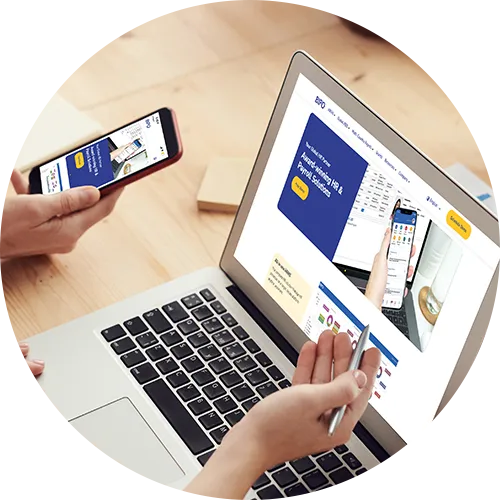
A mobile HR app gives employees and managers access to key HR tasks wherever work happens. That matters because work now happens everywhere.
Common mobile use cases include:
- Checking payslips
- Requesting leave
- Reviewing leave balances
- Updating personal details
- Submitting claims
- Clocking in and out
- Approving requests
- Accessing company announcements
These are not advanced features. They are routine tasks that become much easier when employees can complete them in seconds from a phone.
It helps deskless teams most
For deskless employees, mobile access is especially important. Retail staff, healthcare workers, warehouse teams, drivers, and field employees may not have regular access to a laptop. If HR services depend on desktop access, these employees often get a worse experience by default.
A mobile app closes that gap.
Employee Self-Service Reduces HR Admin
One of the biggest reasons HR teams need mobile capability is simple: it reduces repetitive admin work.
The problem with manual HR support
Without self-service, HR teams spend too much time on tasks like:
- Sending payslips
- Answering leave balance questions
- Updating contact information
- Chasing missing documents
- Confirming request status
- Handling routine approval follow-ups
These tasks are necessary, but they should not consume large parts of the workday.
Self-service creates time for better HR work
When employees can handle simple actions themselves, HR has more time for work that needs judgment and attention, such as:
- Workforce planning
- Employee relations
- compliance reviews
- onboarding improvements
- performance and development support
That shift matters. A mobile app does not just make life easier for employees. It helps HR teams operate more strategically.
Manager Approvals Need to Move Faster
In many companies, delays happen because managers are away from their desks when approvals are needed. A leave request waits. An attendance exception sits untouched. An expense claim is delayed. Payroll then feels the impact.
Mobile approvals reduce bottlenecks
Managers can use mobile access to approve requests quickly without waiting to log in later from a laptop. This is especially useful for:
- Leave requests
- Attendance corrections
- Expense claims
- shift changes
- employee updates requiring sign-off
Faster approvals improve downstream processes
When approvals move faster:
- Payroll gets cleaner and more timely inputs
- Employees get quicker answers
- HR spends less time chasing responses
- Teams avoid last-minute confusion
That creates a smoother operating rhythm across the business.
Better Communication Reaches More Employees
Communication is often harder in remote and hybrid environments. Important updates can get missed when teams are spread across locations and work patterns.
Mobile helps HR communicate in real time
A mobile HR app can support:
- Policy updates
- Company announcements
- reminders for deadlines
- alerts for approvals or actions
- onboarding messages
- location-specific notices
This matters because communication only works if people actually see it. Email alone is not always enough, especially for employees who are not sitting at a desk all day.
It also supports consistency
When communication flows through a central HR platform, messages are easier to track and manage. That helps reduce confusion caused by separate channels, missed emails, or inconsistent local updates.
Productivity Improves When Routine Tasks Become Easier
Small delays add up. If every leave request, profile update, or manager approval takes longer than it should, the business loses time across hundreds or thousands of interactions.
Mobile tools remove friction
A well-designed mobile app helps reduce process friction by making common tasks:
- Faster to access
- Easier to complete
- less dependent on HR intervention
- more visible to employees and managers
That improves productivity at two levels. Employees spend less time navigating HR tasks, and HR spends less time managing avoidable admin.
Adoption matters more than feature count
A system with many features is not useful if nobody wants to use it. Mobile adoption tends to be stronger when the app is simple, clear, and built around real employee needs.
Good adoption usually depends on:
- Easy login and navigation
- Clear menus and actions
- Fast performance
- Useful notifications
- Reliable access on common devices
If the app feels confusing or slow, employees will return to email, chat, and manual workarounds.
Secure Data Access Matters in a Distributed Workforce
Remote work has made secure access more important. Employees and managers need to access HR information outside the office, but that access still needs to be controlled.
What HR teams should look for
A mobile HR solution should support:
- Secure login methods
- Role-based access
- Data privacy protections
- controlled permissions
- audit trails where needed
The goal is to make access easier without making data less secure.
Why this is an operational issue
Security is not only a technical issue. It is also an operational one. If employees cannot access what they need safely and easily, they create workarounds. Those workarounds often create more risk than a secure mobile system would.
A Mobile HR App Helps HR Meet Employees Where They Are
The strongest case for mobile HR is also the simplest. It reflects how people work now.
HR teams are expected to support employees across locations, schedules, and job types. That is much harder when HR tools are built only for desktop users in one place. A mobile app makes HR more available, more responsive, and more practical for everyday use.
For organizations managing remote, hybrid, and deskless teams, mobile access helps bring together self-service, approvals, communication, and day-to-day HR support in one accessible format.
Final Thoughts
In the age of remote work, HR teams need tools that match the reality of a distributed workforce. A mobile HR app helps reduce admin, speed up approvals, improve communication, support deskless employees, and make HR services easier to use across the business.
Talk to BIPO to explore mobile HR tools that help your team support employees anywhere, anytime.